
/ CASE STUDY — VISUAL DESIGN SYSTEM
Building for the partners behind the counter.
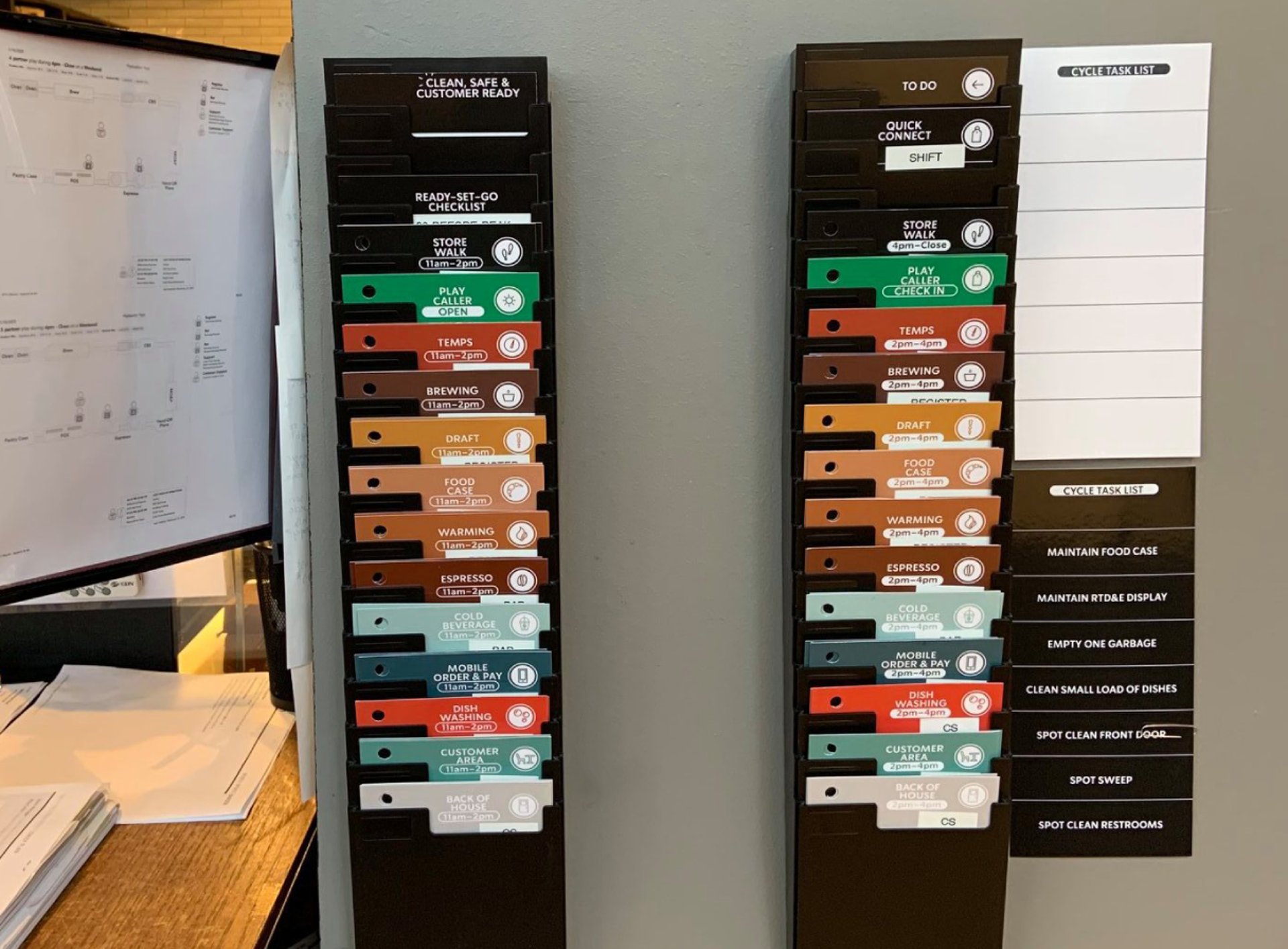
Designed and implemented a scalable visual management system to support daily partner workflows, driving consistency, cleanliness, and safety across 15,000+ coffeehouses.
The messy middle is where the work lives
— PROBLEM TO SOLVE
Coffeehouse partners need a consistent and easy-to-follow system to keep workstations clean and organized throughout the day.
There was no clear visual guide that outlined cleaning tasks by daypart, which led to missed steps, inconsistent standards, and added stress during busy times. We needed a visual management system that helped partners quickly understand what needs to be cleaned, when it should be done, and who is responsible. This will support a more efficient workflow, improve cleanliness, and create a better experience for both partners and customers.
MY ROLE
- Art director
- Designer
CROSS-FUNCTIONAL PROCESS
Creating the vision
The process began with listening to partners — not workshops, not sprints. Hours in back-of-house spaces watching partners navigate their actual day, then translating those observations into prototypes.
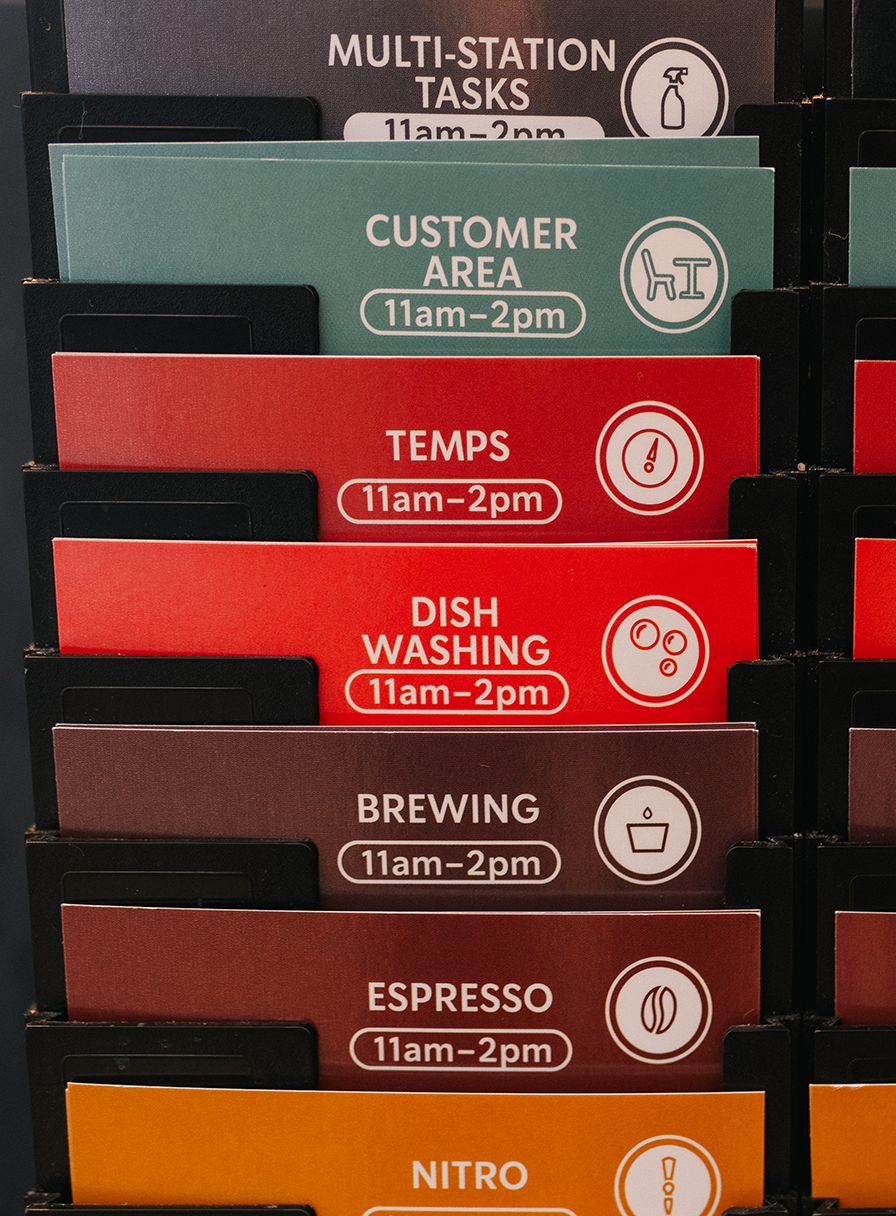
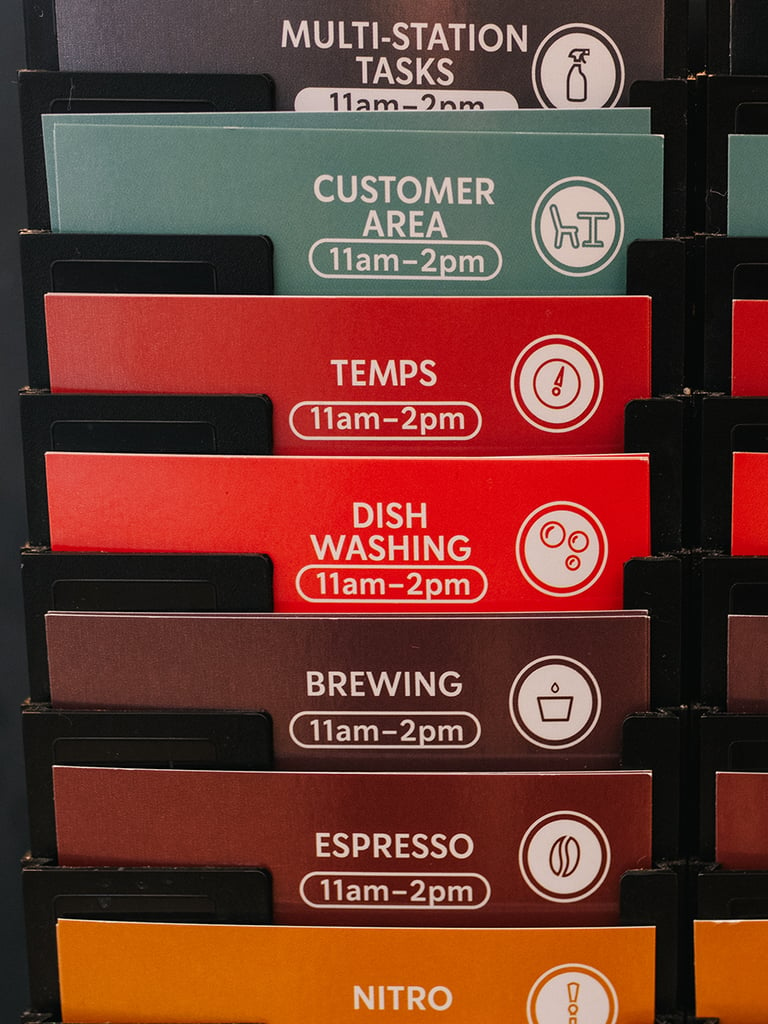
We engaged coffeehouse partners to understand their daily routines and challenges with maintaining clean stations. Through co-creation and prototyping, we developed a visual management task system that clearly outlined cleaning responsibilities by daypart using intuitive icons and colors to quickly identify stations at a glance.
MEASURING SUCCESS
Clean, safe, and ready to serve customers.
Improved task consistency
Reduced stress during transitions
Stronger team accountability
by increasing adherence to daily routines and reducing missed tasks, as evidenced through audit score improvements and partner usage across thousands of coffeehouses.
by providing clear, real-time task visibility and ownership, decreasing ambiguity and improving handoff efficiency as reflected in partner feedback and smoother shift change execution across coffeehouses.
by making task ownership visible and trackable, increasing completion rates and reinforcing shared responsibility through consistent partner adoption and improved audit outcomes across coffeehouses.